COVID-19 Lockdown – Protect Yourself & Your Portfolio
March 24, 2020
The Prime Minister has ordered everyone to stay indoors as of last night, I thought as we embrace this new way of living, it would be good to share our thoughts and experience to help you navigate through this crisis, that's the best we can do. With our experience and knowledge, we will tell you exactly how it is.
When you are in a crisis, you tend to behave irrationally. You panic and will most likely make wrong choices. This irrationality is exacerbated further when your ability to earn is in danger.
All Crisis Pass
I know everybody's situation is different, but all crisis will pass. In the context of your financial plan (which is normally over decades), you will look back as if this crisis did not matter. If you have a long-term view, you did not invest on the basis that you need all of the money back out when the markets fall. The markets will recover, it is a question of when, but we do not know when. The markets could fall further, or it could recover over the coming months. If the market declines further it does not mean investing today was the wrong thing to do. It just means you did not pick the bottom, i.e. buying at the lowest possible point, anticipating a re-bound. The odds are against you picking the bottom and even if you can do this, it is impossible to do it consistently. Our focus now, should be taking control of our own emotional reaction to market ups and downs.
This isn’t about committing new funds, or picking a riskier portfolio, this is about staying on course. This isn’t about betting on a single company share, this is believing that capitalism will continue to work by investing in a portfolio that is well diversified and structured.
For those who need to draw on their investments, this might be a bad time. We call this ‘Sequence risk’, i.e. drawing too much capital in market downturns. The answer might be to postpone or reduce withdrawals until markets improve; or have a dynamic withdrawal strategy in place, i.e. target specific investments that have either retained its value or have appreciated in value.
The Yo Yo of the markets
Global markets have fallen, some predicting a recession and that normally takes many months for people’s confidence to come back. Cities are in lock down and people cannot spend (the demand is frozen). Our view is, once the crisis is over, there should be pent-up demand. People should be going out spending (who wouldn't after a long period of confinement!) and the market should recover. The key question is how long will it take for the crisis to resolve?
Shifting Behaviour
Most people would agree that it is far easier to spend money than to save money so with the lockdown, even if you are earning less, most should realise that they end up saving more. Spending less and saving more are definitely good habits to get into and you may realise that when the economy is in crisis, there is a powerful shift in our thinking and behaviour. We all tend to pick up more sensible financial habits.
Keep well and stay safe. This may be the best opportunity to invest in quality time spent with family and loved ones. Let's believe in rainbows and we will come through this stronger!
Risk Warnings:
The information contained in this article is intended solely for information purposes only and does not constitute advice. The price of investments and the income derived from them can go down as well as up, and investors may not get back the amount they invested. Past performance is not necessarily a guide to future performance.
The Iron Wealth Blog
It’s Less About Numbers, More About Judgment

When Markets Don’t Feel Fair: How We Reduce the Risk of Being on the Wrong Side of the Trade
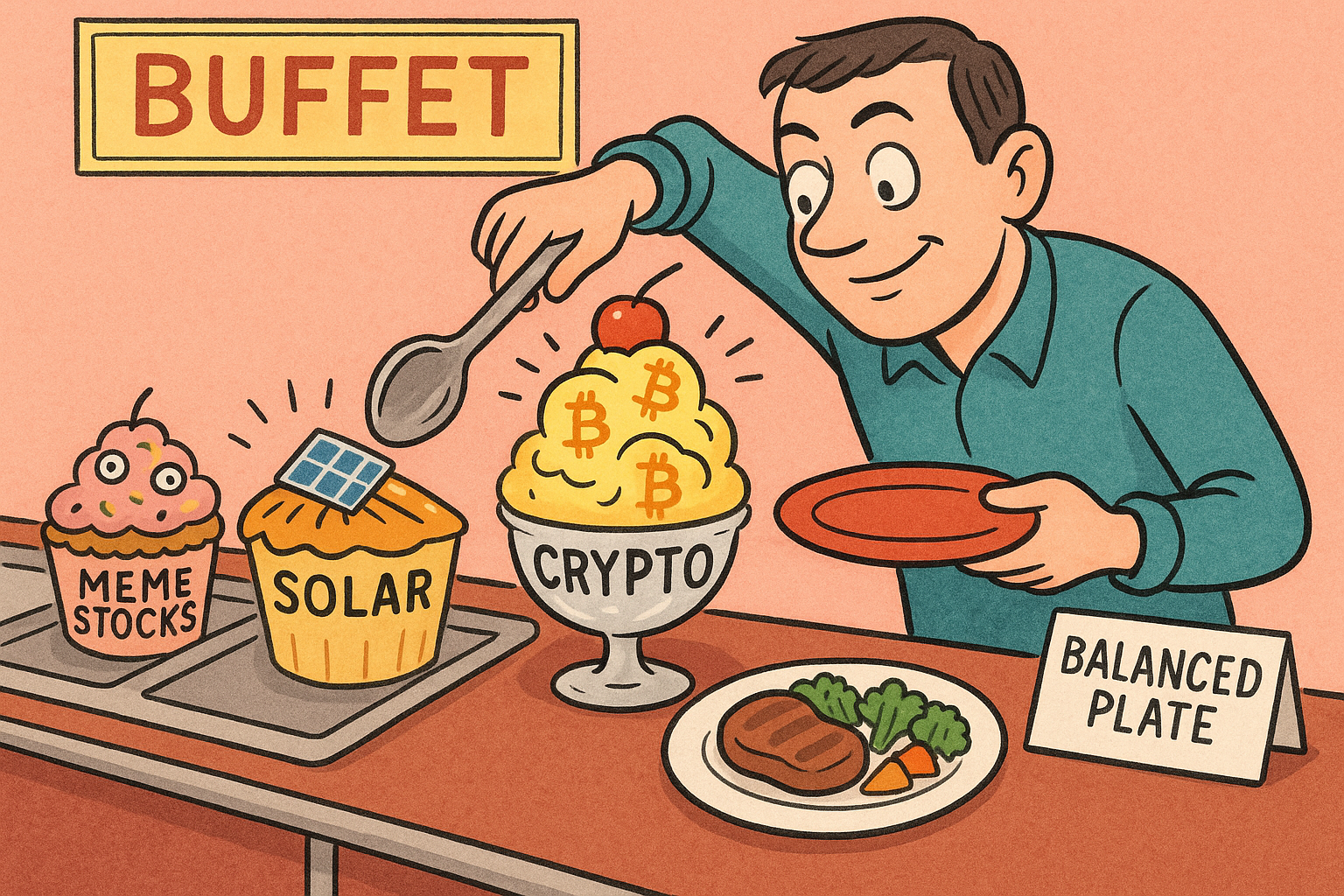
In the world of investing, there is always something trending and receives a lot of attention.
We've been taught to save for a rainy day, which is wise to some extent. However, keeping all your money in cash over the medium to long term carries risks, too. In fact, doing nothing with your money is the biggest risk of all, as inflation will erode its value over time.

We are 5! This month we are celebrating Iron Wealth turning 5 years old. We are so ever thankful for everything we have achieved.

Is it worth switching your investment portfolio to cash? In this blog, we discuss why cash isn't all it's hyped up to be, even at 5%.

There is no better time to size your unsheltered portfolio correctly.
Fact: They are rare, inevitable and are a feature of the markets.

An Alternative Source of Income/Capital: Equity Release & Retirement Mortgage

A common question that you may have heard or asked is “What is the income/yield?” But have you truly thought about the meaning of this question? Firstly, what do they mean by “yield”? Yield is what you get back from your investment, the interest or dividend you receive. Many people like the thought of a stable, sustainable income and therefore, they focus on obtaining a high income. This is especially true for those approaching and/or in retirement. After Years of earning a regular income through our wages, we are bias towards continuing this approach with our pensions and investments. This is another reason why most people would opt for an income stream in the form of a final salary pension over a lump sum. We saw an example of this when Camelot launched ‘set for life’ in 2019, where instead of winning the jackpot as a lump sum, the winner would receive £10,000 a month for life. A lump sum has its benefits too, it gives us flexibility, control, inflation proofing and the ability to manage counterparty risk (the probability of default). Of course, this all depends on individual circumstances and objectives. If you structure an investment portfolio for maximum income/yield only, or as your main objective, you distort the portfolio, leading to far higher risks and can potentially lead to higher taxation in the future.