The Perils of Chasing Yield

May 26, 2021

What does it all mean? 

A common question that you may have heard or asked is “What is the income/yield?” But have you truly thought about the meaning of this question?

Firstly, what do they mean by “yield”? Yield is what you get back from your investment, the interest or dividend you receive.

Many people like the thought of a stable, sustainable income and therefore, they focus on obtaining a high income. This is especially true for those approaching and/or in retirement. 

After Years of earning a regular income through our wages, we are bias towards continuing this approach with our pensions and investments. This is another reason why most people would opt for an income stream in the form of a final salary pension over a lump sum. We saw an example of this when Camelot launched ‘set for life’ in 2019, where instead of winning the jackpot as a lump sum, the winner would receive £10,000 a month for life. 

A lump sum has its benefits too, it gives us flexibility, control, inflation proofing and the ability to manage counterparty risk (the probability of default). Of course, this all depends on individual circumstances and objectives. If you structure an investment portfolio for maximum income/yield only, or as your main objective, you distort the portfolio, leading to far higher risks and can potentially lead to higher taxation in the future. 

Distorted Investment Portfolio

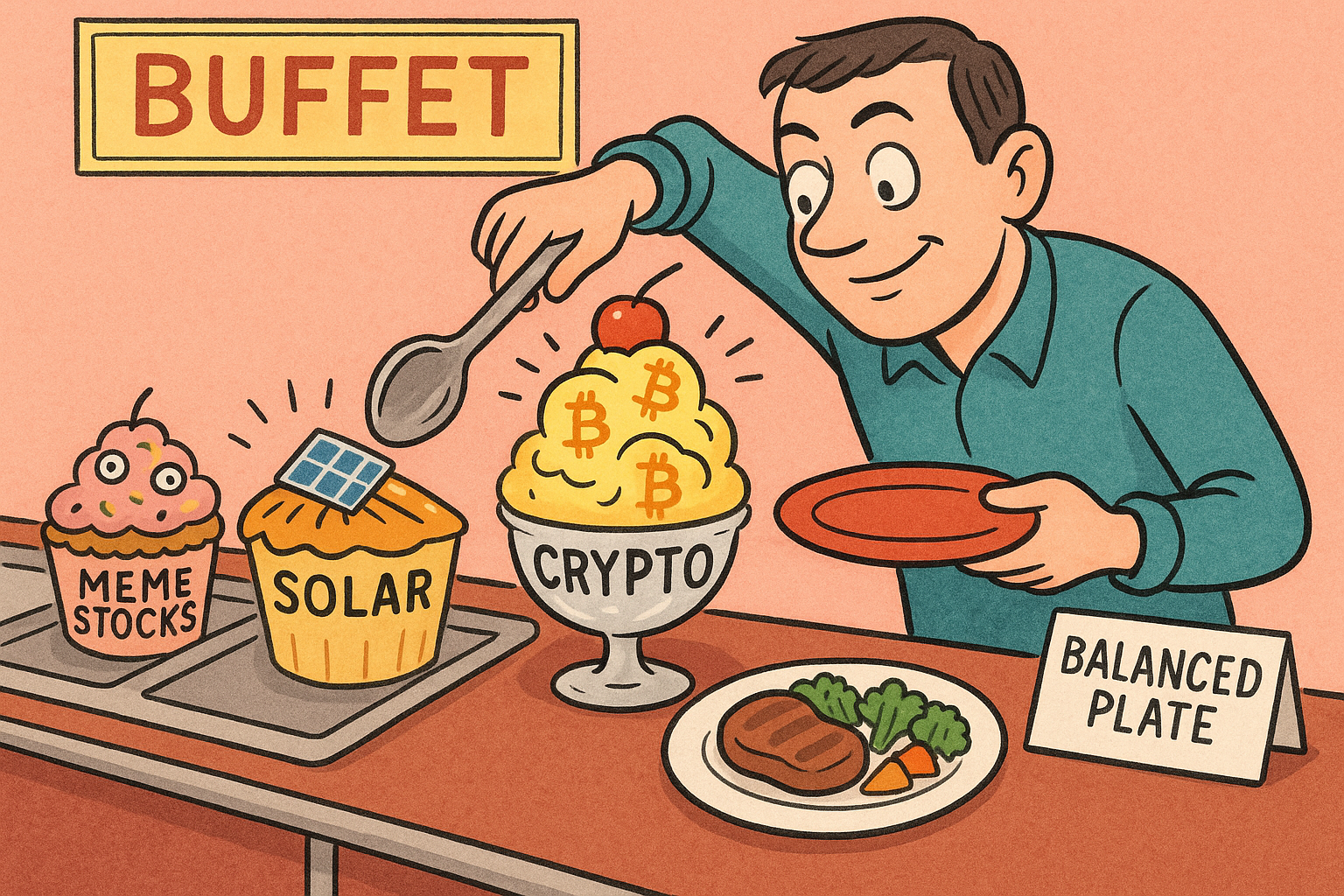
By focusing on yield, this often creates a distorted investment portfolio. It would mean positioning your portfolio to a particular market or investment type which exposes your portfolio to higher risk without it being obvious to you. Numerous studies point to persistently lower risk-adjusted returns, i.e., leads to poorer returns relative to the amount of risk taken on.


If you are already exposed to a similar level of risk as above, and wish to retain this level of risk, then the more favourable approach would be to build a diversified portfolio, then increasing the expected returns using leverage. This improves the expected risk-adjusted returns. Most investors choose concentration in particular sectors over the use of leverage because concentration feels more conventional and less risky. Most people do not understand leverage within an investment portfolio and it is therefore considered unsuitable for most. There is an inherent bias in most investors, most feel leverage for property investments to be acceptable, so why is it not for other investments? Like fire, leverage is an extremely powerful financial tool, if managed wisely.


Income Vs Capital gains

In addition to a distorted portfolio, focusing on a higher income may also lead to higher taxation. In general, capital gain tax rates are lower than income tax rates. The difference between income tax rates and capital gain tax rates makes drawing on capital each tax year very attractive as a form of ‘income’. This creates the need to build portfolios that can provide gains to draw down on, tax-efficiently in the future. Most individuals use up all their income tax allowances, mainly from salary, self-employed earnings, dividends and interest. If capital gains and income were more balanced, an individual might be able to fully use up their capital gains allowance each tax year. 


Total Return Approach

Modern financial planning should be based on a total return approach, regardless of where the returns come from i.e., yield or capital growth. By focusing on total returns, your portfolio is structured to achieve broad diversification, better liquidity and inflation proofing, without exposing you to concentrated risk around particular sectors.


For personal advice on how to set out a portfolio that would work for you, we at Iron Wealth are here to help you reach your financial goals.


Risk Warnings:

The information contained in this article is intended solely for information purposes only and does not constitute advice. The price of investments and the income derived from them can go down as well as up, and investors may not get back the amount they invested. Past performance is not necessarily a guide to future performance.


The Iron Wealth Blog
September 29, 2026
It’s Less About Numbers, More About Judgment
March 25, 2026
When Markets Don’t Feel Fair: How We Reduce the Risk of Being on the Wrong Side of the Trade
July 14, 2025
In the world of investing, there is always something trending and receives a lot of attention.
June 11, 2024
We've been taught to save for a rainy day, which is wise to some extent. However, keeping all your money in cash over the medium to long term carries risks, too. In fact, doing nothing with your money is the biggest risk of all, as inflation will erode its value over time.
By Helen Yip • November 28, 2023
We are 5! This month we are celebrating Iron Wealth turning 5 years old. We are so ever thankful for everything we have achieved.
By Tony Yip • November 15, 2023
Is it worth switching your investment portfolio to cash? In this blog, we discuss why cash isn't all it's hyped up to be, even at 5%.
November 24, 2022
There is no better time to size your unsheltered portfolio correctly.
February 24, 2022
Fact: They are rare, inevitable and are a feature of the markets.
November 17, 2021
An Alternative Source of Income/Capital:  Equity Release & Retirement Mortgage
October 23, 2020
As the impact of COVID continues to adversely affect business, it looks like further redundancies are inevitable. This may sound grim, but you can lessen the blow by getting financially prepared. For those who are still in employment and are facing potential redundancy, sometimes it helps to take a step back to see the bigger picture. Here are some questions that you can ask yourself? 1. Are you ready to take early retirement? 2. If not, how quickly can you get another job and at what pay? 3. How big is the carrot? 4. Do you want to retire now or do you want to tie this in with your partner? 5. Are you in good health? 6. What do you have planned for retirement? i.e. if it is travelling the world, then probably not the right time 7. What’s the job security like for your partner?
More Posts